


Various forms of hernia
Anyone can develop a hernia. There are many types of hernias and various causes for their occurrence. Inguinal hernias are the most common; one in four men will develop one at some point in their lives. In many cases, the hernia causes discomfort for the affected individual—regardless of the type—but excellent treatment options are available today.
An abdominal or groin hernia can develop for various reasons. It may occur after heavy lifting, be caused by intense coughing or result from weakness in a surgical scar. It can also have congenital or anatomical causes. Hernias are slightly more common in older people and those who are overweight. Anterior abdominal wall hernia is a general term for the various types of hernia that occur in the abdominal wall. These often include incisional, umbilical and epigastric hernias. Hernias can also develop after stoma surgery; these are known as parastomal hernias. A hernia in the groin is called an inguinal hernia.
Abdominal Wall Hernias – Different Types of Abdominal Hernia
The abdominal wall consists of several layers of tissue. The innermost layer is the peritoneum, a thin membrane covering the inside of the abdominal wall. Next comes a layer of fat, one or more layers of muscle and a layer of subcutaneous fat. The skin forms the outermost layer. When a hernia develops, the peritoneum and abdominal contents (usually fat and intestine) protrude through a weakened area in the abdominal wall. A sac containing abdominal contents forms beneath the skin. This usually appears as a bulge in the abdomen. A hernia is often small at first but can grow larger if it develops and causes discomfort.
What Is an Abdominal Wall Hernia?
Abdominal wall hernias can occur in several places in the abdomen. The most common types are umbilical, epigastric and incisional hernias. A parastomal hernia, which develops around a stoma, is also a type of abdominal wall hernia. What these hernias have in common is a weakened area or opening in the abdominal wall through which the hernia can protrude. The Swedish National Board of Health and Welfare (Socialstyrelsen) classifies umbilical, incisional, epigastric and parastomal hernias, among others, as different types of abdominal wall hernia. The bulge may become more noticeable when abdominal pressure increases, for example when coughing, sneezing, exercising or lifting heavy objects.

Symptoms of an Abdominal Wall Hernia
An abdominal wall hernia can cause a feeling of pressure, heaviness or discomfort and sometimes pain. Symptoms can vary depending on the size and location of the hernia and how much strain it is subjected to in everyday life. The hernia can often be seen as a soft bulge beneath the skin and may sometimes be pushed back in.
For some people, support in the form of an abdominal hernia support garment can provide greater comfort and help hold the hernia in place. A support garment does not cure the hernia itself, but can support the weakened abdominal wall and may be an option for people who cannot or do not wish to undergo surgery.
Incisional Hernia After Surgery
An incisional hernia is a common complication after abdominal surgery. It develops at or near the surgical scar, where the abdominal wall has weakened. The hernia can cause pain or discomfort and make it more difficult to move around as usual. It may also become more prominent when standing, coughing, sneezing or lifting heavy objects.
An abdominal hernia support garment can support the weakened abdominal wall and help hold the hernia in place. It can be used for support in everyday life and, in some cases, during recovery after abdominal surgery. The most suitable type of support garment depends on factors such as the hernia's location and size, as well as individual needs.
Parastomal Hernia – Hernia Around the Stoma
A parastomal hernia develops in the area around a stoma. It is caused by a weakening of the abdominal wall around the stoma opening and may appear as a bulge around the stoma. Parastomal hernias are common after stoma surgery, and not all require surgery.
Wearing some form of support belt may feel more comfortable when you have a parastomal hernia. You can choose a softer belt worn over the stoma bag or a firmer belt with an opening for the stoma appliance, allowing the bag to sit outside the belt. The best option varies considerably from person to person, so it is advisable to consult your stoma care nurse or doctor for advice on the most suitable support.
A support belt worn over the stoma can also help support the abdominal wall, for example during physical activity or heavier work. NordiCare's stoma support garments are available in different designs to suit different needs.
Umbilical Hernia – Hernia at the Navel
Umbilical and epigastric hernias can occur even in people who have not had abdominal surgery. Umbilical hernias are relatively common and develop around the navel, where the abdominal wall is naturally somewhat weaker. They may appear as a soft bulge near the navel and become more noticeable when abdominal pressure increases.
In children, umbilical hernias may disappear on their own, while in adults they are assessed according to factors such as size and symptoms. Treatment may be necessary if symptoms occur. An abdominal hernia support garment can provide support around the abdomen and help hold the bulge in place.
Epigastric Hernia – Hernia Above the Navel
An epigastric hernia develops along the midline of the abdomen above the navel, towards the breastbone. It may appear as a small bulge and can sometimes cause tenderness or discomfort, particularly when abdominal pressure increases. Epigastric hernias can occur in both children and adults.
As with other types of abdominal wall hernia, an abdominal hernia support garment can provide support to the area. The most suitable type of support depends on the location of the hernia and individual needs.
Treatment of Abdominal Wall Hernias
Not all abdominal wall hernias require treatment. Surgery may be considered if the hernia causes significant discomfort. For people who need support but are not undergoing surgery, an abdominal hernia support garment may be an option.
An abdominal hernia support garment can help hold the hernia in place and support the weakened abdominal wall, but it does not cure the hernia itself. It is important to choose a support garment that fits the location of the hernia and provides the right type of support.
If you experience sudden, severe pain, if the hernia becomes hard or swollen, or if it can no longer be pushed back in, seek medical attention.
Inguinal Hernia – The Most Common Type of Hernia
Inguinal hernias are very common. Studies have shown that almost a quarter of the male population have an inguinal hernia or have undergone surgery for one. An inguinal hernia is often first noticed as a soft bulge in the groin. The bulge can be pushed back in and usually disappears when lying down, at least initially. In most cases, an inguinal hernia causes only mild discomfort and sometimes a feeling of heaviness in the area. It can also cause aching. The hernia usually protrudes when abdominal pressure increases, for example when lifting something heavy or straining during a bowel movement.
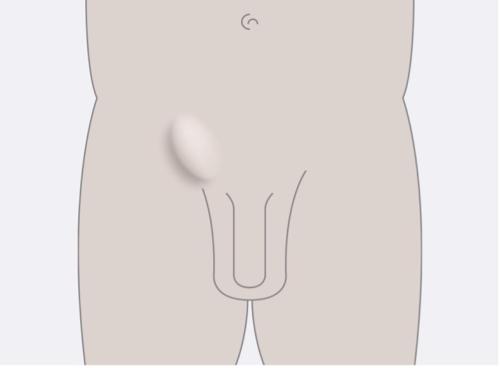
Inguinal hernias are more common in men, who account for more than 90% of cases. This is because men have a naturally weaker area in the abdominal wall where the spermatic cord passes through the muscle layers on its way to the scrotum.
Incarcerated Inguinal Hernia
In both small and large inguinal hernias, the contents of the hernia can become trapped. This is known as an incarcerated inguinal hernia and requires surgery as soon as possible. With an incarcerated inguinal hernia, the blood supply to the contents of the hernia sac is threatened, and the intestine or fatty tissue may be damaged. An incarcerated inguinal hernia usually causes severe pain, making it quickly noticeable. An inguinal hernia cannot be cured on your own and will not disappear by itself. However, the contents of the hernia sac may move in and out through the opening in the abdominal wall.
Treatment of Inguinal Hernias
Surgery is the only way to repair an inguinal hernia. However, an inguinal hernia belt can also be used to manage it. This type of support helps hold the hernia in place. Today, hernia support underwear and inguinal hernia supports are available in discreet designs that are not visible under clothing. If an inguinal hernia is left untreated, it may extend into the scrotum, in which case it is called a scrotal hernia.
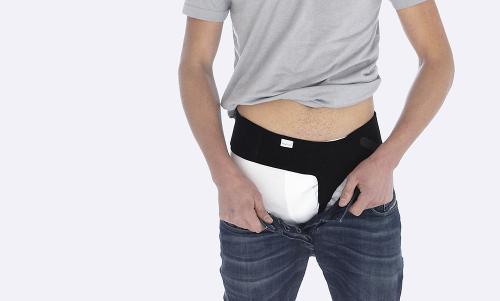
During inguinal hernia surgery, the abdominal wall is often reinforced with a synthetic mesh that becomes incorporated into the tissue, allowing the abdominal wall to regain its full strength as early as the day after surgery. This means that patients can return to full activity as soon as the pain allows. The previous advice to rest for six weeks no longer applies. After surgery, there is a risk of aching or nerve pain. It is estimated that up to 20% of patients who undergo surgery experience varying degrees of pain in the operated area, sometimes even disabling pain. Therefore, surgery should only be performed on people whose hernia causes significant discomfort.


