


Is surgery required for an inguinal hernia?
Inguinal hernia is a common type of hernia in men and is often discovered when a soft bulge is suddenly noticed in the groin. The hernia is caused by a weakness in the abdominal wall, which leads to abdominal organs bulging through the wall. One in four men develops an inguinal hernia at some point in their lives; while it often causes mild discomfort or aching, effective help and treatment are available today.
An inguinal hernia cannot be cured on your own and will not go away by itself. Surgery is the only way to repair an inguinal hernia. Men diagnosed with an inguinal hernia that affects their daily lives should be offered surgery. All women diagnosed with a groin hernia, with or without symptoms, should undergo surgery. Inguinal hernias in children are always treated surgically. While waiting for surgery, or if surgery is not performed, an inguinal hernia belt or support can be used to manage the hernia. This type of support helps hold the hernia in place. Today, inguinal hernia supports are available in discreet designs that are not visible under clothing, for both bilateral hernias and unilateral hernias. For small to moderate inguinal hernias, and after surgery, hernia support underwear with pads can be used to apply the required pressure to the hernia. Hernia support underwear is easy to put on and take off and is suitable, for example, for older patients.
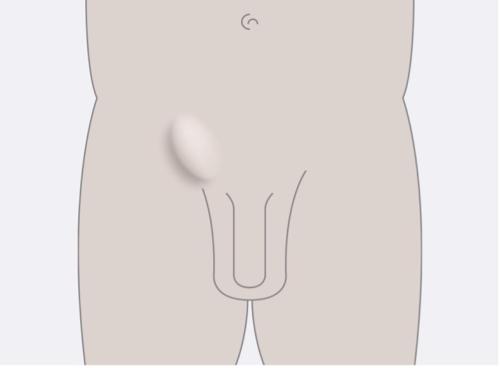
Incarcerated Inguinal Hernia
If a groin hernia is not treated surgically, there is a risk that the hernia becomes trapped where it protrudes, potentially cutting off the blood supply. This can damage the contents of the hernia sac and the intestine. This is known as an incarcerated inguinal hernia and requires immediate medical attention. An incarcerated inguinal hernia usually causes severe pain and can be recognised quickly.
What Does the Surgery Involve?
During inguinal hernia surgery, the abdominal wall is often reinforced with a synthetic mesh that becomes incorporated into the tissue, allowing the abdominal wall to regain its full strength as early as the day after surgery. This means that patients can return to full activity as soon as the pain allows. The hernia can be repaired through an incision in the groin, known as open surgery, or using keyhole surgery. Keyhole surgery, which is now the most common method, uses a narrow instrument that transmits images to a monitor, allowing the surgeon to see the procedure. Keyhole surgery is performed under general anaesthesia. Patients can usually go home on the same day as the operation.
After Surgery – Inguinal Hernia Recovery
Most people experience relatively mild discomfort after inguinal hernia surgery. There is a risk of aching or nerve pain, and up to 20% of patients who undergo surgery experience varying degrees of pain in the operated area. Bruising around the wounds may also occur. Heavy lifting should be avoided for 1–2 weeks after surgery. Otherwise, patients can generally return to their normal lives and are encouraged to keep moving. In the past, patients were advised to rest for six weeks, but this is no longer recommended. The risk of recurrence, meaning a new inguinal hernia after surgery, is now approximately 5%. Smokers have twice the risk of complications after surgery.


