


Acute back pain and other back problems
Back pain is common and affects most people at some point. Causes can include genetics, age, accidents, physical strain, medical conditions, surgery, weak muscles, or a sedentary lifestyle. Smoking and being overweight also increase the risk of back pain. However, the specific cause of the back pain often remains unidentified. What is known, though, is that back pain leads to significant functional impairment and affects daily life.
Lower back pain (acute lumbago and lumbago)
The most common location for back pain is the lower back, known as lower back pain. It is estimated that almost 80% of people experience lower back pain at some point in their lives. The pain, known as lumbago, often develops gradually and may also cause a feeling of fatigue. Acute lumbago, also known as acute low back pain, can cause sudden spasms in the back muscles, accompanied by sharp, dull or stabbing pain. Acute low back pain is often caused by overloading or prolonged sitting and can be triggered by twisting or lifting. It usually resolves on its own after a few days, but in some cases it can develop into a more persistent back problem. Women who are pregnant or have been pregnant may experience sharp or shooting pain in the lower back. Read more about back pain during pregnancy.
What is acute low back pain and what are the symptoms?
Acute low back pain occurs when pain suddenly develops in the lower back, often in connection with a movement, lifting or another form of strain. The pain may be sharp, stabbing or cramp-like and make it difficult to move normally. Stiffness is also common, and it may be difficult to straighten the back or change position. The pain can sometimes radiate to the buttocks, but with acute low back pain, the lower back is usually the main area affected.
What can you do if you have acute low back pain?
With acute low back pain, it is usually beneficial to keep moving as much as feels manageable. Short walks and gentle movements may be better than lying still for long periods. However, avoid movements and activities that clearly worsen the pain. Heat may provide relief for some people, and a back support can provide additional support and help relieve strain during the initial period when the pain is at its worst.
Acute low back pain usually improves within a few days to a couple of weeks. If the pain does not improve, frequently returns or becomes persistent, it may be advisable to contact a healthcare professional for an assessment. Seek urgent medical attention if back pain occurs together with symptoms such as difficulty controlling urination or bowel movements, numbness around the groin or genitals, or significant weakness in the legs.
Herniated disc
A herniated disc is also a common back problem and primarily affects people aged 35–40. A herniated disc causes symptoms if it presses on the nerves and can lead to inflammation of the nerve tissue, resulting in sciatica with radiating pain down the legs. A herniated disc can occur in the lower or upper back, as well as in the thoracic spine, although this is less common. In addition to pain, a herniated disc can cause tingling or numbness in the legs and feet, as well as difficulty controlling urination and bowel movements. Herniated discs often resolve on their own within a few weeks. Ronja and Bure are two stable back orthoses that help relieve pain when it is at its worst. The back supports Tuff and Multi provide comfortable support in everyday life for milder pain.
Sciatica
Lower back pain that radiates down one leg indicates irritation or inflammation involving the sciatic nerve. This long nerve runs from the lower back, along the back of the thigh and down to the toes. For example, a herniated disc can compress or irritate the sciatic nerve. Sciatica can also cause numbness, muscle weakness and loss of strength in the leg and foot. As many as 5–10% of people with back pain experience sciatica. Problems caused by herniated discs and sciatica can often persist for a long time, and approximately 5% of cases require surgery. To help relieve symptoms, it is beneficial to keep moving, even if movement causes some pain. However, avoid movements that worsen the pain. Take frequent, short walks. Cold therapy and massage may sometimes relieve the pain. A back support that reduces strain on the lower back can make moving around easier and less painful.
The term pseudo-sciatica is used to describe sciatica-like pain that radiates downwards. Unlike true sciatica, this is not caused by pressure on the sciatic nerve, but by an irritated nerve outside the spine. It can often be caused by tight muscles. Pseudo-sciatica usually causes somewhat less intense pain.
Osteoporosis
In osteoporosis, the bones become weakened and the vertebrae may collapse. This can lead to a spinal fracture known as a vertebral compression fracture, which often causes severe back pain. Osteoporosis primarily affects older people. Causes may include genetics, age, menopause, medication or intestinal diseases. A forward-bent posture and a rounded back may be signs of osteoporosis.
Overuse
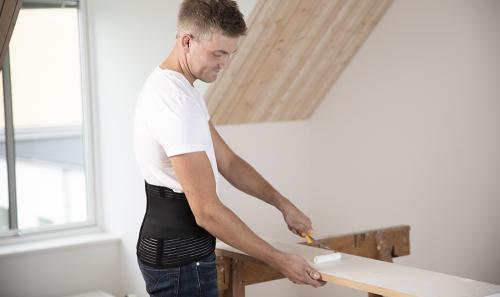
Pain in the thoracic spine, which often radiates from the back towards the front of the chest, may be caused by overworked muscles. Common causes include poor posture, prolonged sitting and heavy lifting. Support and stabilisation may help relieve the symptoms.
Back support or posture corrector
For most types of back pain or postural problems, it is beneficial to keep moving and stay active. Using a back orthosis or posture corrector may therefore help relieve pain during walks, exercise or everyday activities. A good support helps reduce strain and promotes healthy circulation in the muscles.


