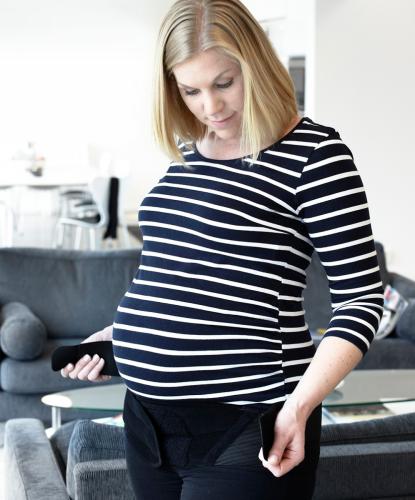


Back pain during pregnancy
More than half of all women suffer from back pain during pregnancy. The primary cause is the significant changes the body undergoes, such as pressure from the uterus, weight gain, altered posture, and hormonal effects. Lower back pain is the most common type and often begins between weeks 24 and 36 of pregnancy.
Back pain or pelvic pain during pregnancy?
Back pain during pregnancy may feel like a dull ache or fatigue in the lower back. Pelvic girdle pain can also be felt in the lower back, but may also affect the buttocks, hips, groin or pubic bone. The pain can vary in intensity and may become more noticeable throughout the day.
It can be difficult to determine the cause of the symptoms yourself. A midwife or physiotherapist experienced in pregnancy-related pain can help assess your symptoms and identify the right support.
Why can back pain vary during pregnancy?
Back pain can vary from day to day and may depend on how far along you are in your pregnancy and how your body is being loaded. As your abdomen grows, your centre of gravity changes, which can affect the strain on your back. Some women mainly experience pain after a long day, while others develop pain during everyday activities. The extent to which symptoms affect mobility varies from person to person, and pain does not necessarily mean that something is wrong.
When should you seek medical advice?
Contact your midwife or healthcare provider if back pain affects your daily life, does not improve or gets worse. Seek urgent medical attention if you experience severe or sudden pain, fever or feel significantly unwell. If back pain occurs together with bleeding or regular, painful contractions, you should also contact your healthcare provider.
10 tips to relieve back pain
There are several ways to try to relieve back pain. Ask a physiotherapist or midwife for advice on what is best for you. Here are 10 tips you can try yourself.
- Make sure your back is supported when sitting or lying down. A pillow can provide good support.
- Vary your standing and sitting positions, ideally before the pain starts, to help prevent discomfort.
- Exercise and physical activity are good for your back. Walking, cycling, water aerobics, pregnancy exercise classes and swimming are all suitable forms of exercise during pregnancy. You can also strengthen your abdominal muscles to help support your back.
- Try to maintain good posture during everyday activities.
- A back support or maternity back belt helps relieve strain and pain and reduces the forward shift in your centre of gravity. The support can also make it easier for you to stay active.
- Heat can help relieve pain. Try placing a wheat bag or another warm compress on the painful area.
- Avoid heavy lifting and bending far down to pick things up. Bend your knees instead.
- Wear supportive, stable shoes. - Gentle massage may help reduce pain.
- Lie down from time to time, preferably on your side with your knees bent.