

Arm slings and shoulder immobilizers for support and immobilization following injury or surgery
Immobilization and offloading may be part of the treatment following injuries, trauma, or surgical procedures. The type of support required depends on factors such as the extent of the injury, the affected tissue, and the patient's stage in the healing process. Depending on the needs, treatment may range from simple offloading using an arm sling to more extensive stabilization with a shoulder immobilizer.
-

QuickSling arm sling
A padded sling that is used for simple immobilisation of injured shoulders, elbows and wrists.
201189050
0 kr / pc.Add to favorites- Stock status
- In stock
-
ComfortSling Arm sling
Intended to use in shorter treatment.
201110950
0 kr / pc.Add to favorites- Stock status
- In stock
-
SmartCuff shoulder immobilization
SmartCuff secures the arm and shoulder after trauma or surgery in order to completely prevent unwanted movement.
201200050
0 kr / pc.Add to favorites- Stock status
- In stock
-
Duo shoulder immobilizer
Fixates the shoulder and provides support and relief in case of acute injuries or trauma.
201140640
380 kr / pc.Add to favorites- Stock status
- In stock
-
DuoTrain shoulder immobilization
Provides comfortable support and relief to ease pain-related shoulder problems.
201190640
189 kr / pc.Add to favorites- Stock status
- In stock
-
DuoPlus shoulder immobilizer
A two-piece shoulder immobiliser that relieves the shoulder without causing pressure on the neck.
201130640
450 kr / pc.Add to favorites- Stock status
- In stock
-
DuoQuick Shoulder immobilizer
Fixes the shoulder and arm and provides support and relief.
201240030
0 kr / pc.Add to favorites- Stock status
- In stock
-
HumerusComfort Collum arm sling
An arm sling with the function to immobilize and relieve the shoulder.
202252050
0 kr / pc.Add to favorites- Stock status
- In stock


Varying levels of support
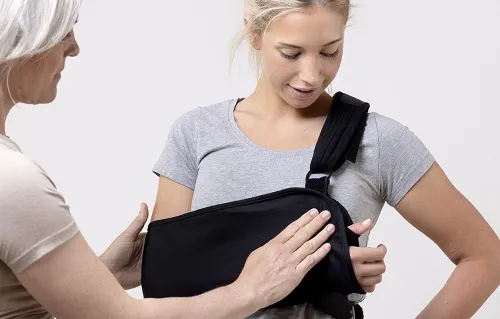
The appropriate product depends on the diagnosis, the phase of treatment, and the extent to which movement needs to be restricted. A simple sling may suffice when the primary goal is to provide rest and offloading, whereas a more stable design is used when the joint or an injured area must be held in a specific position. QuickSling is a padded model that provides comfortable support for the entire upper limb and can be used when the hand and forearm require offloading. ComfortSling features a soft, elastic material and is adjustable to the user, making it convenient for short-term use. For situations requiring stabilization and offloading of the shoulder joint, the HumerusComfort Collum is designed to provide enhanced support. When firmer immobilization is required, options include SmartCuff, Duo, DuoTrain, DuoPlus, and DuoQuick. These are designed with various features and functions to provide the appropriate level of stability and comfort based on treatment needs.
Proper immobilization in the right phase
During the early healing phase, immobilization can be crucial for protecting the tissue and creating favorable conditions for healing; however, prolonged inactivity can simultaneously contribute to stiffness, muscle weakness, and impaired function. Consequently, as healing progresses, treatment often shifts gradually from protection and offloading to increased movement and loading. The manner in which this transition occurs depends on the specific injury or surgery and should follow the treatment plan prescribed by a healthcare provider. Proper fit is also important; a support should sit securely without exerting unnecessary pressure. Numbness, tingling, discoloration, increasing swelling, or discomfort may indicate that the fit needs adjustment. A healthcare provider should be contacted if symptoms persist or are severe. By selecting the right solution based on the diagnosis, treatment phase, and individual needs, it is possible to ensure both comfort and optimal recovery.