


Questions and answers about post-operative compression
After a surgical procedure, it is recommended to use compression over the operated area. Here are answers to some common questions about how and why.
When should I use compression?
Compression helps after aesthetic or cosmetic surgery, for example on the abdomen, buttocks, breasts, face, arms or thighs. Compression is also beneficial after reconstructive surgery following cancer treatment, accidents and other conditions.
How can I apply compression?
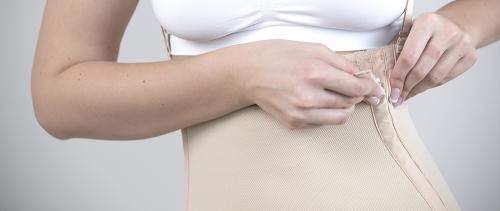
To apply compression after surgery, you can use a compression garment. This is a close-fitting garment designed to promote healing and improve the outcome after surgery. Compression garments are made from elastic fabrics that provide constant, even pressure over the operated area and are used after procedures on different parts of the body. They may take the form of trousers, a bra, a body garment or a top. After abdominal surgery, compression is provided using an abdominal binder.
Why should I use compression after surgery?
Compression after surgery can help improve and speed up the healing process and support the best possible surgical outcome.
Here are some additional reasons why compression is recommended:
- Improved and faster healing due to increased skin temperature and better circulation, helping oxygen-rich blood reach the operated area.
- A reduced risk of blood clots, which are an uncommon but serious complication after surgery.
- A compression garment or abdominal binder covers and protects the incision and any dressings, helping keep bacteria away.
- A reduced risk of inflammation, swelling, fluid accumulation, bleeding and bruising.
- Pain relief.
- The pressure often makes coughing, laughing and sneezing more comfortable.
How should I use a compression garment?
It is generally recommended to wear the garment as much as possible during the first two weeks after surgery, around the clock. However, the exact duration and frequency depend on the type of surgery and your surgeon’s advice. Many patients are advised to wear the garment for 4–6 weeks, including while sleeping during the first few weeks. After a few weeks, it is often possible to remove the garment for a few hours a day or for half a day at a time. Sometimes, you may be advised to wear the garment only during the day or at night; many people prefer to sleep in it. Wearing compression as recommended can help support the healing process.
It is important to ensure that the garment fits evenly and does not crease. The skin underneath should remain smooth to avoid permanent creases. It is also beneficial to try to stand and walk as much as you can. If the compression is too tight, it may negatively affect circulation and healing. The pressure should be gentle and supportive, without causing pain. You should be able to carry out everyday activities without the garment causing discomfort or affecting your breathing. If it does, you should consult your surgeon.
Most of our compression garments can be machine-washed at temperatures of up to 60°C, although 40°C is recommended to help them last longer. It may therefore be useful to have two garments so that you can alternate between them. You may also need a smaller size after a few weeks as the swelling subsides, to ensure the correct level of compression.
How do I choose the right compression garment?
There are garments available for almost every part of the body, in a variety of styles and materials. It is important to choose a compression garment that meets your needs and offers good quality, fit and comfort. Poor-quality garments made from cheaper materials are more likely to cause problems. Choosing the correct size is also essential for healing and the final result. Make sure you take your measurements correctly and follow the size charts and instructions provided for the product.
For a garment to be comfortable to wear around the clock, it should be made from a soft, comfortable and breathable material. It should also be free from hard seams, buttons or other details that dig into the skin. The material should be stretchy enough to adapt to your individual body shape. Our knitted compression garments are seamless and made with four-way stretch, making them unique in terms of comfort and fit. It is also important that the garment retains its shape and stretch over time. When choosing a compression garment, a garment with a compression level corresponding to compression class 1 (15–22 mmHg) is recommended.
Features and design can be important depending on your individual needs. Some garments, for example, have an opening at the crotch to make using the toilet easier. Adjustable or removable shoulder straps may be beneficial if you need to customise the fit or vary the style. If you want a garment that is discreet under clothing or helps conceal dirt and blood stains, colour may also be an important factor.


